Divergence Rate
The divergence rate is how far a compliant, sovereign or on-prem edition runs behind the commercial one: features shipped, the share that arrive late or never, and the lag. The architecture sets it, not the regulation.
The divergence rate is how far a compliant, sovereign or on-prem edition runs behind the commercial one: features shipped, the share that arrive late or never, and the lag. The architecture sets it, not the regulation.

A compliance boundary is approved as a certification and operated as a second release train. The cost nobody budgets is the divergence rate, and architecture sets it.
Three vendors use decision lineage for the reasoning behind a system’s conclusion. I use it for the human acceptance nobody records: who generated a change, how deeply it was reviewed, what it can break, and who owns the risk.

Verification tells you AI-generated code is sound. It cannot tell you who decided to accept the risk. The case for recording decision lineage in the merge path.
Accountability for AI-generated code has to be built into the development process, not bolted on after an incident. Three operational shifts, a tooling reality check, and a governance control plane concept.
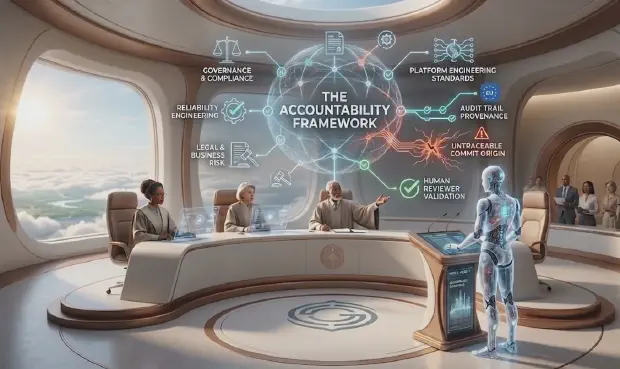
AI coding tools broke the accountability chain engineering organizations relied on for decades. Developers report 42% of the code they commit is AI-generated, and most haven’t decided who owns the outcome when it fails.

Broadband gateways are becoming service-defined edge compute platforms. Open standards like USP, open-source communities, and cloud-native management are turning connectivity hardware into programmable infrastructure.
A panel on open source in customer premises equipment. Why container lifecycle management is worth having for the operational change rather than the applications, and where USP adoption is heading.
Shipping a whole firmware image for every small fix is why devices in the field run old software. The case for modular package management, a standards-based management plane, and unprivileged containers at the edge.
Residential gateways have had spare compute for years and almost nothing runs on them. What the memory ceiling, the build chain and the lifecycle problem actually demand before that changes.