Decision Lineage
Three vendors use decision lineage for the reasoning behind a system’s conclusion. I use it for the human acceptance nobody records: who generated a change, how deeply it was reviewed, what it can break, and who owns the risk.
Three vendors use decision lineage for the reasoning behind a system’s conclusion. I use it for the human acceptance nobody records: who generated a change, how deeply it was reviewed, what it can break, and who owns the risk.

Verification tells you AI-generated code is sound. It cannot tell you who decided to accept the risk. The case for recording decision lineage in the merge path.
Accountability for AI-generated code has to be built into the development process, not bolted on after an incident. Three operational shifts, a tooling reality check, and a governance control plane concept.
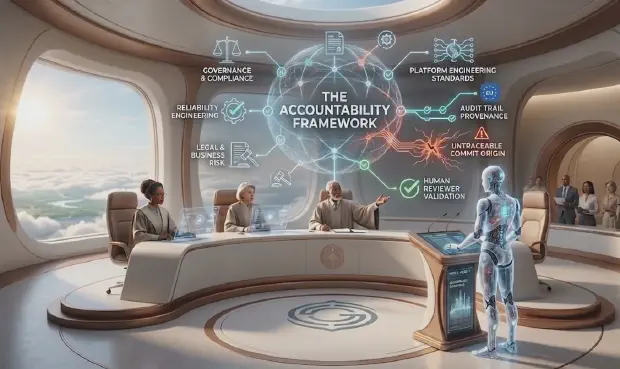
AI coding tools broke the accountability chain engineering organizations relied on for decades. Developers report 42% of the code they commit is AI-generated, and most haven’t decided who owns the outcome when it fails.

Edge AI is about autonomy and survivability, not just latency. When connectivity drops or round-trip time matters, the edge has to make decisions on its own. That changes how you architect AI systems and who controls them.